

 Lietuvių
Piano
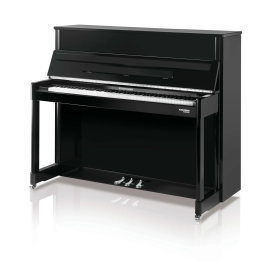
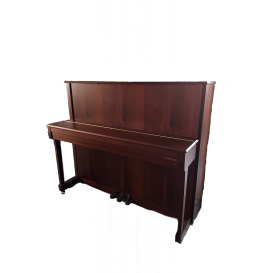
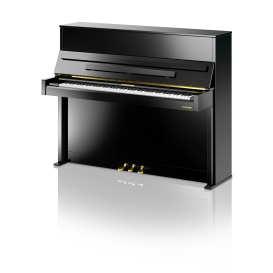
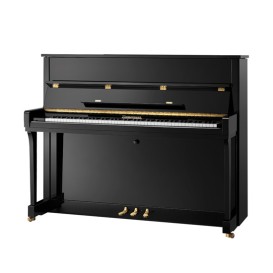
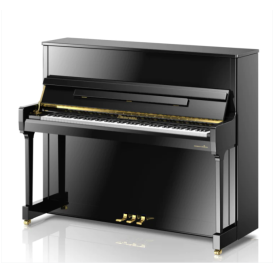
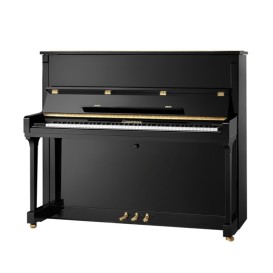
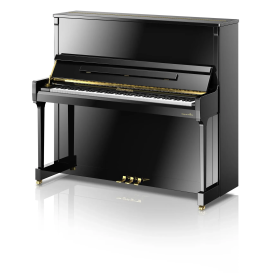
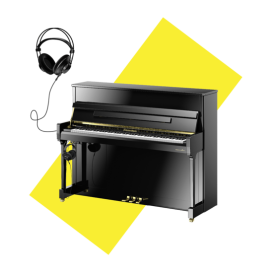
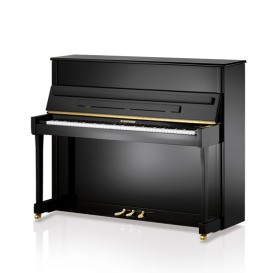
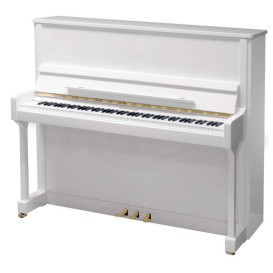
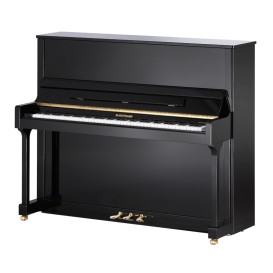
You can find our upright piano assortment here:



Piano
Piano: How to Choose the Right Instrument
An upright piano is a keyboard instrument in which the strings are arranged vertically, and hammers strike them when a key is pressed, producing a sound amplified by the soundboard. It is one of the most time-tested and beloved musical instruments in the world.
A piano demands effort and patience, but returns that investment many times over: it develops musicality, concentration, and gives you that particular feeling when your fingers begin to follow a melody. But choosing the right piano is not easy - there are many options, the price range is wide, and a piano is one of those purchases worth thinking through carefully.
Acoustic or Digital Piano?
This is the first question to answer before any purchase.
A digital piano - an excellent choice if you have limited space at home, need silence, or your budget is lower. Modern digital pianos do a fairly good job of simulating the feel of the keys. However, no digital piano has yet managed to fully replicate the authentic feel and sound of an acoustic instrument.
An acoustic piano - a completely different level. Its key response, natural sound resonance, and mechanical action are something digital instruments still cannot replicate. Pianists who take learning seriously sooner or later return to acoustics - only on an acoustic can you develop a true pianist's touch and the ear sensitivity needed for subtle tonal nuances. Quiet playing on an acoustic piano is also possible with C. Bechstein VARIO technology.
Anyone who truly loves keyboard instruments will always answer this question unambiguously - an acoustic piano is the better choice.
How Does an Acoustic Piano Work?
It's useful to understand the mechanism - it helps you better evaluate different models and make an informed decision.
When a key is pressed, the action activates a hammer that strikes a metal string or group of strings. The string vibrates and produces a sound amplified by the wooden soundboard. When the key is released, a damper touches the string and the sound stops. When the key is held down, the damper stays away from the string, so the sound continues.
What to Look for When Choosing an Acoustic Piano?
Height and string length - the height of a piano directly determines the size of the resonant soundboard and the length of the strings - and therefore the depth and quality of the sound. The taller the piano, the longer the bass strings - which means a richer, deeper-sounding low register. Pianos up to 114 cm are compact and suit smaller spaces, but their sonic capabilities are limited. From 114 cm upwards, the bass and mid-register sound is significantly better. Professional instruments reach 125 cm and above.
The action - this is the heart of the piano. A good action allows you to play subtle dynamic nuances, responds quickly to repeated keystrokes, and over time requires little adjustment. The best manufacturers use carefully regulated actions made from high-quality wood and felt.
The soundboard - the tonal quality of a piano depends greatly on the wood used for the resonant soundboard - spruce is most commonly used. The better and longer-dried the wood, the richer and more sustained the sound.
Tuning stability and maintenance - an acoustic piano needs to be tuned regularly - typically twice a year. A new piano may need more frequent tuning in its first year, while the strings fully settle. Good instruments hold their tuning longer and require less frequent technical attention.
Silent system - modern pianos can have a Vario silent system installed, or it may already be integrated. It allows you to play through headphones without producing any acoustic sound in the room - while retaining the full feel of the acoustic action. This is an ideal solution for apartments and for those who want to play at any hour of the day.
Is It Worth Buying a Used Piano?
The supply of used pianos in Lithuania is large - listings are full of Soviet-era and other instruments at attractive prices. It's understandable why this is tempting. But caution is strongly advised.
The core problem is that without a specialist, it's practically impossible to assess the condition of a used piano yourself. The soundboard may be cracked, the action worn, the strings rusted or broken, and the key felt hardened and no longer fit for purpose. None of this may be visible at first glance, yet the repairs can cost anywhere from a few hundred to several thousand euros.
Another common issue is that old pianos often can no longer hold their tuning - especially those that have stood untuned for years or been kept in damp conditions. Such an instrument may need tuning every few weeks - which is not only expensive but pedagogically harmful, as the student gets used to playing on an instrument that sounds wrong.
When you do the real maths: a used piano costing a few hundred euros, plus 200–400€ for a technical inspection and service, plus ongoing tuning costs and potential action repairs, will often end up costing more than an affordable new instrument - which comes with a manufacturer's warranty and no unknown technical history.
If you're still considering a used instrument - make sure to bring in a piano technician to inspect it before purchasing. It's a small cost that can protect you from a much larger mistake.
Our Piano Range
The acoustic pianos we offer belong to the C. Bechstein family - a German company with over 170 years of history, whose instruments are played by the world's greatest pianists. Every piano in the C. Bechstein family comes with a 5-year manufacturer's warranty.
The full range of acoustic pianos we offer - with detailed specifications, photos and prices - can be found on our dedicated website fortepijonai.lt. Below is a brief introduction to each brand.
Zimmermann - the most accessible brand in the C. Bechstein family, suited to both beginners and more advanced players looking for a reliable instrument at a reasonable price. The Studio series (S2, S4, S6, S8) spans from the most compact and affordable model to a concert-level instrument. All Zimmermann instruments meet the strict quality standards of C. Bechstein.
W. Hoffmann - higher-class instruments in the C. Bechstein family, made in the Czech Republic to German standards. Three lines offer a wide range of choice: Vision - an introduction to high quality, Tradition - balanced sound and a pleasant touch for serious musicians, Professional - exceptional sound and touch for demanding pianists.
C. Bechstein Academy - professional-level instruments with exceptional tonal qualities and an outstanding sound profile. Intended for serious pianists aiming for the highest results.
C. Bechstein Concert & Residence - the absolute pinnacle of quality. Handcrafted masterpieces, each refined in meticulous detail. Made for the most demanding musicians and prestigious spaces.
An Acoustic Piano at Home: Practical Considerations
Placement - a piano should be kept away from direct sunlight, radiators and damp walls. Ideally against an interior wall, where temperature and humidity are most stable.
Delivery and installation - an acoustic piano is a heavy instrument (from 180 to 250 kg) and requires professional delivery. We ensure safe delivery and installation across Lithuania.
Regular tuning - ideally 1-2 times per year. Key regulation is needed less often - once every few years.
C. Bechstein Connect - some models come with an integrated digital system that connects the instrument to a smartphone or tablet and provides additional learning and playing features. On other models this can be added as an option.
Who Is an Acoustic Piano For?
Children beginning to learn - an acoustic piano develops a true pianist's touch from the very first lessons. Teachers often recommend acoustics from the start, as a digital instrument can develop incorrect playing habits.
Advanced musicians - if a pianist is studying seriously and playing demanding repertoire, an acoustic instrument is essential. Only acoustics allow you to fully unlock all the possibilities of dynamics, articulation and tone colour.
Music lovers at home - a piano at home is not just an instrument, but a part of the interior, a family tradition, and an enrichment of everyday life.
Try Before You Buy - Visit Us In Store
A piano is a purchase that must be tried in person before buying. Different models differ greatly in key feel, tonal character and dynamic range - and this is best understood by sitting down and playing for yourself.
We invite you to visit our shop in Vilnius, Saltoniškių g. 29: try all the models on display freely, speak with our consultants, and get personalised advice based on your needs, space and budget.
The full range of acoustic pianos and grand pianos - including all Zimmermann, W. Hoffmann, C. Bechstein Academy and C. Bechstein Concert & Residence models with full specifications and prices - can be found at fortepijonai.lt. We deliver across Lithuania.